



By Jelili Gbadamosi
The Lagos State Government has disclosed that it generated approximately ₦1.7 trillion in revenue, with investments in transportation, healthcare and infrastructure forming part of its efforts to accelerate development across the state.
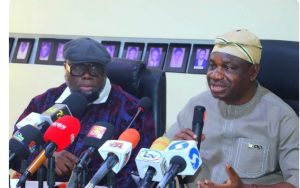
The Commissioner for Information and Strategy, Gbenga Omotoso, disclosed this on Friday during a media parley with journalists at the Ministry of Information and Strategy, Alausa, Ikeja.
Omotoso said the revenue was being deployed to finance critical infrastructure and social services, insisting that the administration of Governor Babajide Sanwo-Olu remained committed to delivering projects until the end of its tenure.
Highlighting the government’s transportation investments, he disclosed that Lagos had increased its waterways fleet from about seven boats to at least 32.
He also announced the procurement of 500 last-mile buses, additional high-capacity buses and 24 coaches for the Red Line rail service to improve mass transportation.
According to him, the European Union-supported Omi Eko Project would further strengthen water transportation and expand connectivity across the state.
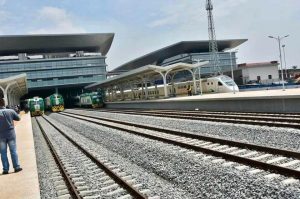
The commissioner said the Blue Line rail service had recorded approximately nine million passenger journeys and 70,000 trips since operations began.
He explained that commuters travelling between Mile 2 and Marina now spend between 13 and 15 minutes, compared with the two-and-a-half to three hours previously required.
He added that the Red Line had reduced travelling time between Agbado and Oyingbo to approximately 30 minutes.
On healthcare development, Omotoso identified the ongoing construction of the New Massey Street Children’s Hospital as a major investment aimed at improving access to specialised medical services.
He said the government was also addressing multiple taxation through the harmonisation of levies and additional legislative measures to eliminate arbitrary collections.
Speaking on environmental challenges, the commissioner identified indiscriminate waste disposal, blocked drainage channels and encroachment on waterways as major contributors to flooding.
He urged residents to support government efforts by maintaining proper environmental practices and complying with safety regulations to prevent fire outbreaks.
Omotoso further called for stronger collaboration between the government and media organisations, urging journalists to verify information and uphold professional standards in reporting.
He maintained that the state remained committed to press freedom, transparency and constructive criticism.
Earlier, the Permanent Secretary of the ministry, Olatunbosun Ogunbanwo, described the media engagement as an opportunity to showcase government achievements, address public concerns and strengthen communication with residents.
He urged journalists to ensure that residents were adequately informed about government policies, projects and programmes.