




By Ikugbadi Oluwasegun
Nigeria’s Supreme Court has confirmed the President’s constitutional power to declare a state of emergency in any state facing a potential breakdown of law and order or descent into anarchy.

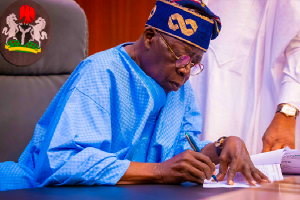
The decision, delivered in a 6-1 split judgment, arose from a legal challenge brought by Adamawa State and 10 other states governed by the Peoples Democratic Party (PDP). The plaintiffs contested President Bola Tinubu’s declaration of emergency rule in Rivers State, which included the six-month suspension of elected state officials.
The court dismissed the suit after upholding preliminary objections on jurisdictional grounds but proceeded to address the merits, ultimately ruling in favor of the executive’s actions.
Key highlights from the majority opinion, led by Justice Mohammed Idris:
Section 305 of the 1999 Constitution grants the President broad discretion to take “extraordinary measures” to restore normalcy during an emergency.
While the section does not explicitly detail these measures, it allows for actions such as temporarily suspending elected officials, provided they are limited in duration.
In the lone dissenting voice, Justice Obande Ogbuinya argued that although the President may declare an emergency, this power cannot extend to suspending democratically elected officials, including governors, deputy governors, and lawmakers.