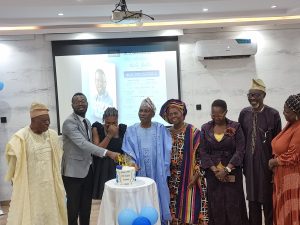





In recent years, an unsettling trend has begun to creep into Nigeria’s academic space, the growing obsession with titles. The latest example I witnessed occurred at an event last week. During the programme, the Master of Ceremony addressed a senior academic from a Polytechnic as a Chief Lecturer. The man immediately corrected him, insisting that he should be addressed as a Professor, arguing that a Chief Lecturer in a Polytechnic is equivalent to a Professor in a university. He said this because he was sitting in the midst of professors from various universities across Nigeria, and he happened to be the only titled seated, so he decided to tag along.

A Chief Lecturer in a Polytechnic is not a professor. Likewise, a professor in a university is not a chief lecturer. Both titles belong to different academic systems with distinct philosophies, structures, and expectations.
The issue, therefore, is not about superiority or inferiority. It is about institutional integrity and respect for academic structures.
When I was younger, I admired the Polytechnic system greatly. Becoming a Chief Lecturer was — and still is — a remarkable professional achievement. In fact, within the Polytechnic framework, Chief Lecturer represents the highest academic rank, except for administrative appointments such as Rector or similar leadership roles. Historically, there were even times when the salary of a Chief Lecturer was higher than that of a university professor.
Each academic system was deliberately designed with its own structure and progression. The university system emphasizes deep theoretical research and postgraduate scholarship, while the Polytechnic system focuses more on applied knowledge, technical expertise, and practical training. Both are essential to national development.
However, problems arise when individuals attempt to blur these clearly defined distinctions.
To become a professor in most universities today is an extremely rigorous process. A candidate must demonstrate significant scholarly output, including publications in reputable international journals—many of which are indexed in high-impact categories such as Q1 journals. The candidate must also supervise doctoral students to completion, attract competitive research grants, and contribute meaningfully to institutional administration and academic development.
In other words, the title of Professor represents the highest level of research leadership and intellectual authority within the university system.
The pathway to becoming a Chief Lecturer, on the other hand, follows a different academic model. It emphasizes teaching excellence, applied scholarship and professional engagement. Typically, the requirements do not include supervising PhD students or securing large research grants, and the publication requirements are structured differently.
This difference does not make one system superior to the other. It simply reflects the distinct missions of universities and polytechnics.
Yet, the desire to appropriate titles outside one’s institutional framework continues to grow. Some academics now seek to adopt titles that their own systems were never designed to produce. Even more troubling is the emerging culture where individuals go on sabbatical leave and return with newly acquired academic titles.
This practice is deeply problematic.
Sabbatical leave was never designed to function as a shortcut for acquiring academic ranks or promotions. Traditionally, it exists to allow scholars engage in research, collaborate with colleagues in other institutions, and deepen their intellectual contributions to their home institutions. Turning sabbatical into a vehicle for title acquisition undermines academic standards and erodes institutional credibility.
Ironically, many doctoral programmes already teach us the philosophical foundations of knowledge. Courses such as Philosophy of Communication expose scholars to epistemology—the study of knowledge—and the ethical frameworks that guide intellectual inquiry. These principles should remind us that academic credibility is built on rigorous scholarship and integrity, not on the accumulation of impressive-sounding titles.
Nigeria’s higher education sector already faces enough credibility challenges. The last thing it needs is an academic culture where titles are pursued without regard to institutional frameworks or scholarly requirements.
If we truly want to protect the integrity of our universities and polytechnics, we must respect the identity of each system. A Chief Lecturer should be proud of that title. A Professor should equally respect the path that produced that designation. Neither title should be diluted or artificially replicated.
Academic titles should reflect earned scholarship, institutional structure, and professional responsibility, not personal ambition for prestige.
Until we begin to take this seriously, the danger is that academic titles will gradually lose their meaning. And once titles lose their meaning, the credibility of the entire academic system is placed at risk.
Written by O. A Adesile (PhD)