


By our Reporter
The Federal Government has said that the long-delayed Digital Switch Over project is finally set for nationwide rollout on June 17, 2026, with officials describing it as a breakthrough for the country’s broadcasting industry.
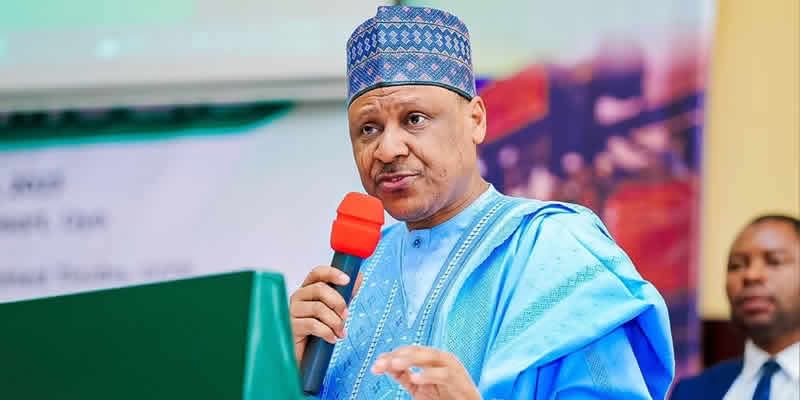
Speaking after a facility tour of the Nigerian Communications Satellite Limited headquarters in Abuja on Wednesday, the Minister of Information and National Orientation, Mohammed Idris, said the initiative would transform broadcasting, advertising and television viewership across Nigeria and sub-Saharan Africa.
“The promise that President Bola Tinubu made that he is going to reform all sectors. We are seeing this reform in action in the broadcast industry,” Idris said.
He noted that Nigerians had waited for years for the transition from analogue to digital broadcasting, adding that the process was now complete and ready for commissioning on June 17.
“You recall that for many years, Nigerians have been grappling with this idea of the DSO, the digital switchover.
“In other words, removing our transmissions from analogue to digital. Now this has happened, and it is ready to be commissioned by the 17th of June this year,” he revealed.
According to the minister, the project would provide improved audience measurement for broadcasters and advertisers, enabling them to determine viewing patterns and make informed advertising decisions.
“We have gone around the facilities. We have already seen that many of the channels have been unbundled here.
“This is going to bring a lot of advantages to all the broadcasters, the viewers, and everybody that advertises,” the minister stated.
Idris further stated, “Now science is at play. I mean, if you are now viewing any particular station, you know who is viewing what, and how many people are viewing.
“So the standard measurement that was absent in the previous experiment is now being made available here.
“This will help advertisers to take informed decisions about what programme it is that people are watching, what it is that Nigerians want to watch across all the demographics.”
Idris also said the collaboration between NigComSat, the National Broadcasting Commission, the Ministry of Communications and the Ministry of Information and National Orientation had made the rollout possible.
He commended President Tinubu for providing the resources needed to actualise the project.
“It’s been such a shame in the past that Nigeria has not been able to achieve this. But now, the digital switchover is here,” he said.
The minister added that the new digital system would provide free and clearer television services while creating healthy competition among broadcasters and content producers.
“Competition is going to set in. Everybody is going to compete. Content is going to grow. Viewership, hopefully, will also grow,” Idris stated.
He further disclosed that the platform would soon migrate fully to high-definition broadcasting.
Idris noted, “The most important thing is that we are now moving to HD. After the launch, we will be fully in HD.”
The minister also addressed concerns about how the new system differs from previous DSO efforts, especially the issue of set-top boxes.
“In the past, the set-top boxes provided under earlier Digital Switch Over efforts were encrypted, meaning you had limited flexibility in choosing or switching services.
“As a result, the cost also became higher. Now, this service is free, and the government has already absorbed some of these costs,” Idris noted.
He explained that earlier phases of the DSO had been limited in scope.
“The DSO was already experimenting in about eight states around this country,” he said.
The Managing Director and Chief Executive Officer of NigComSat, Jane Egerton-Idehen, said the organisation was focused on ensuring uninterrupted service delivery and sustained technological advancement.
“It is important for us that the service delivery is perfect and the technology is continuous,” she said.
Egerton-Idehen also revealed plans to launch two additional satellites to strengthen service coverage and improve operations.
The NigComSat boss added, “The president has given us the ability to even launch two more satellites. So the work has only just started. The work has only just begun.”
Also speaking, the Director-General of the National Broadcasting Commission, Charles Ebuebu, said the new DSO platform was designed to leverage emerging technologies and expand accessibility beyond major cities.
Ebuebu explained, “So what we have done is basically taking into consideration emerging technologies, which is why we are going by way of the application.
“Regardless of where you are, and even if you think about demographics, the younger population likes things on the go. They are mobile devices, that’s why we put this there.”
The NBC boss said the platform would launch with about 100 television channels, with more content producers already expressing interest in joining.
“Now we are updating the list of channels. We are going to have 100 channels by the day of launch,” he revealed.
Ebuebu added that the commission had established six regional studios nationwide to support content creators and reduce dependence on Lagos and Abuja.
“You don’t have to travel to Lagos or Abuja or Kano to go and develop your content. You just go to the nearest regional studio and develop,” he stated.
The NBC chief also disclosed plans for a multilingual national call centre and a nationwide network of certified installers to support users.
“In all, we want to create the market for Nigeria. One platform for Nigeria,” he said.
NBC announced in 2024 that it had secured a N10bn grant approved by President Tinubu to drive the nationwide expansion of digital television coverage, in renewed efforts to accelerate the DSO, which was first initiated in 2016.
At the time, Ebuebu said the funding was aimed at expanding digital broadcasting services beyond the eight states where Digital Terrestrial Television had already been launched, with plans to extend coverage nationwide using satellite technology.
He explained that while the DTT rollout had recorded progress in eight states, the next phase would focus on achieving nationwide coverage through satellite transmission, allowing Nigerians in all parts of the country to access the same digital television content.