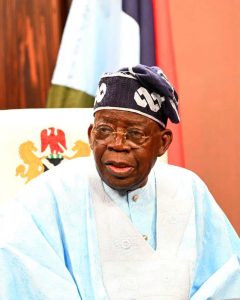





The Trade Union Congress (TUC) has urged the Federal Government to increase workers’ salaries without waiting for a fresh minimum wage negotiation, arguing that a permanent pay rise would offer more meaningful relief than the proposed ₦70,000 transport allowance.
Speaking on Channels Television’s Politics Today on Wednesday, TUC President Festus Osifo said salary increases and minimum wage negotiations were separate matters that could be handled independently.
Osifo recalled that the union had made its position clear during its National Administrative Council meeting on October 8, stressing that the government could intervene in workers’ financial difficulties without reopening minimum wage talks.
“You don’t need to negotiate minimum wage before government could intervene in the plight of workers, not at all,” he said.
According to him, minimum wage agreements can remain unchanged for years in some countries while governments still grant salary increases to improve workers’ welfare.
“Increment in salary and minimum wage are very different. Minimum wage is minimum, but there is no maximum wage,” Osifo explained.
He added that the government could therefore improve workers’ earnings directly without making a new minimum wage agreement a condition.
The TUC president spoke after the Federal Government announced a ₦70,000 monthly transport intervention for workers across all levels for six months, beginning in November 2026.
The measure followed a conciliation meeting with the Nigeria Labour Congress (NLC), convened by the Federal Ministry of Labour and Employment in Abuja on Tuesday, October 27.
However, the TUC rejected the proposed allowance, demanding a more permanent solution, including salary increases and implementation of the agreement with the Joint Health Sector Unions (JOHESU).
“If what you are offering today is a temporary measure, we reject it; we want something that is much more sustaining and something that is much more permanent,” Osifo said.
He added that the union could have considered the proposal if the money had instead been incorporated into workers’ salaries.