




Nigeria Must Invest Oil Revenue in Renewable Energy, Green Technology – Professor Mesagan
By Our Reporter
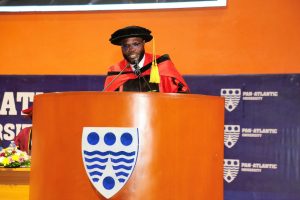
Professor Ekundayo Peter Mesagan,
a Professor of Energy and Environmental Economics at Pan-Atlantic University, Lagos, has called on Nigeria and other oil-producing countries to invest proceeds from fossil fuel resources in renewable energy, green infrastructure and environmentally friendly technologies to achieve sustainable development.
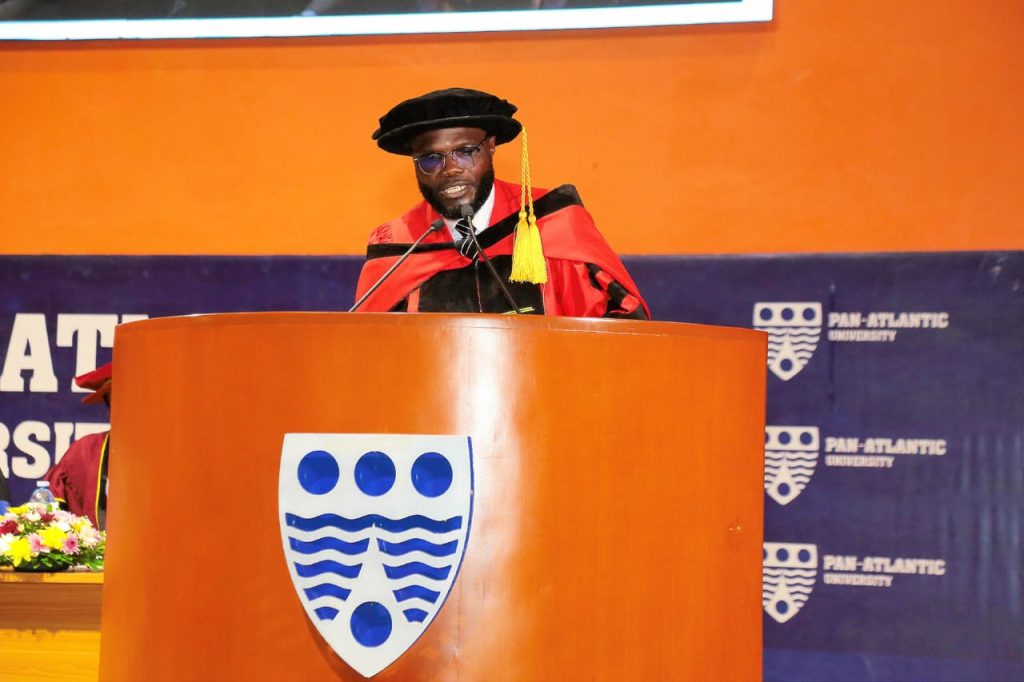
Mesagan made the call while delivering the 26th inaugural lecture of Pan-Atlantic University, titled “Making Lemonade From Lemons: The Fossil Energy and Sustainability Puzzle,” on Friday, October 9, 2026.
He argued that although fossil fuels had played significant roles in economic growth, industrialisation and modernisation, their environmental consequences, particularly greenhouse gas emissions and climate change, required urgent attention.
According to him, oil-rich developing countries must find innovative ways of converting the economic benefits of fossil fuels into opportunities for environmental sustainability rather than allowing resource abundance to become a source of long-term environmental challenges.
Using the analogy of lemons and lemonade, the professor described fossil fuels as the lemons because of their economic value and environmental drawbacks, while environmental sustainability represents the lemonade that countries must produce through innovation, strategic investments and effective governance.
He noted that global fossil fuel-related carbon dioxide emissions increased from approximately 22 billion tonnes in 1990 to about 39 billion tonnes in 2024, reflecting the growing environmental consequences of dependence on non-renewable energy sources.
The professor identified five major strategies through which Nigeria and other oil-producing countries could balance fossil fuel exploitation with environmental sustainability.
He advocated the deployment of environmentally friendly industrial machinery, urging the government to channel part of its oil revenue into developing local capacity for renewable energy and green infrastructure technologies instead of depending heavily on foreign countries.
Mesagan also called for greater investment in Carbon Capture, Utilisation and Storage (CCUS) technology, explaining that the technology could capture carbon dioxide emissions from fossil fuel operations for underground storage or further industrial use.
He specifically urged existing and proposed refineries in Nigeria to consider adopting CCUS technology to remain competitive in the global energy market.
The professor further recommended the strategic utilisation of natural gas as a transition fuel, noting that it emits less carbon than crude oil and could provide a bridge towards expanding renewable energy without significant financial and capacity disruptions.
He also advised Nigeria to diversify its energy mix by systematically investing oil proceeds in solar, hydro and wind energy to reduce overdependence on fossil fuels.
On governance, Mesagan stressed the need for stronger environmental regulations, pollution-control laws and carbon pricing mechanisms to ensure that investments in technology and energy transformation align with sustainability objectives.
He maintained that the challenges confronting resource-rich economies were determined less by the availability of natural resources than by weak governance, limited economic sophistication and poor fiscal management.
Reflecting on his research contributions, the professor disclosed that he had published 69 academic works, comprising 61 journal articles and eight book chapters, focusing on the relationships among energy, finance, natural resources, economic development and environmental sustainability.
He explained that his research had demonstrated the importance of capital investment, financial innovation, technological transformation and effective policy frameworks in addressing the environmental consequences of fossil fuel consumption.
Mesagan also emphasised that poverty reduction, energy accessibility and environmental sustainability should be treated as interconnected priorities in Nigeria and Africa’s energy transition agenda.
Looking ahead, he identified climate financing, green energy access, carbon markets, renewable energy integration in artificial intelligence and energy storage as areas requiring further research and interdisciplinary collaboration.
Professor Mesagan is a member of the Governing Council of the Nigerian Economic Society and the Nigerian Association for Energy Economics. He also served on Nigeria’s Agenda 2050 Drafting Committee under the Federal Ministry of Budget and Economic Planning.
He is a Professor of Energy and Environmental Economics at Pan-Atlantic University, where he also serves as Alternate Director of Research and Impact.