




By our Reporter
President Bola Ahmed Tinubu has assured global investors that Nigeria’s youthful population remains one of the country’s greatest strengths, describing Nigerian youths as tech-savvy, innovative and ready to integrate into the global digital economy.
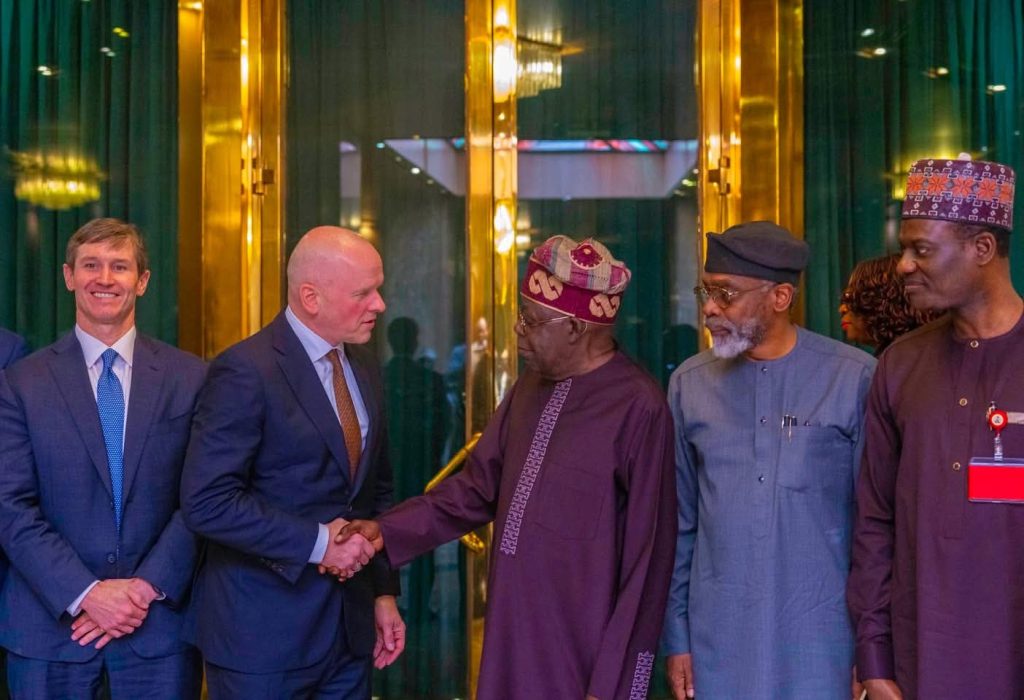
The President gave the assurance on Tuesday while receiving a delegation from Mastercard led by its Global Chief Executive Officer, Michael Miebach, at the State House in Abuja.
President Tinubu welcomed Mastercard’s proposal to train five million Nigerian businesses and equip them with digital skills, describing the initiative as a significant step towards expanding economic opportunities and accelerating digital inclusion across the country.
He said his administration has repositioned and stabilised the economy to enable Nigeria participate more competitively in the global marketplace, with particular attention on empowering young people and small businesses through technology and innovation.
According to the President, ongoing efforts to formalise Nigeria’s vast informal sector will unlock greater opportunities for investment, employment, business growth and digital transformation.
“The most important asset is our youth,” Tinubu said. “What you have been doing with our young population is commendable, and we will continue to support that in every form.”
The President also highlighted the importance of strengthening payment systems and expanding financial inclusion for Micro, Small and Medium Enterprises (MSMEs), noting that institutions such as the Bank of Industry possess valuable databases that can support the growth of small businesses.
He reiterated the Federal Government’s commitment to partnering with Mastercard and other global organisations to advance digital literacy and economic inclusion.
Speaking during the meeting, Minister of Finance and Coordinating Minister of the Economy, Wale Edun, said ongoing economic reforms have created significant opportunities in Nigeria’s digital economy, credit ecosystem and payment infrastructure.
He noted that government initiatives aimed at digitising public services and formalising businesses are yielding positive results, with more than 10,000 informal businesses reportedly applying for registration daily in recent months.
The minister added that reforms in taxation, consumer credit, student loans, mortgages and small-business financing have opened new avenues for investment and economic participation.
Edun further observed that Nigeria remains a leading technology hub in Africa, hosting five of the continent’s nine fintech unicorns.
In his remarks, Mastercard CEO Michael Miebach reaffirmed the company’s confidence in Nigeria and pledged continued support for the country’s economic transformation agenda.
Miebach, who said he was directly involved in establishing Mastercard’s operations in Nigeria in 2011, described the visit as a homecoming and praised the government’s alignment of fiscal and monetary policies.
He disclosed that Mastercard currently facilitates a significant segment of Nigeria’s financial ecosystem, helping to prevent approximately $200 million in fraud annually while contributing about $2 billion in foreign exchange inflows.
According to him, the company is committed to supporting Nigeria’s 40 million small businesses through digital capacity-building programmes designed to help entrepreneurs safely integrate technology into their operations.
“We want to unlock the power of Nigeria’s SMEs, connect the diaspora to the homeland and help ensure Nigeria remains the largest and most thriving economy on the continent,” Miebach said.
He revealed that Mastercard has developed a three-year programme focused on equipping small businesses with digital skills and cyber-security awareness, adding that technical workshops have already been planned to ensure practical implementation and measurable impact.
The Mastercard chief also highlighted the company’s investments in digital trust, resilience and cybersecurity, including the establishment of a Cyber Centre of Excellence that provides threat intelligence, incident response capabilities and support for addressing emerging artificial intelligence and cyber risks.
The meeting underscored growing collaboration between the Nigerian government and global technology and financial institutions aimed at accelerating digital transformation, strengthening financial inclusion and creating opportunities for millions of young Nigerians and small businesses.