




By Jelili Gbadamosi
The World Bank has raised concerns over funding challenges in Nigeria’s childcare sector, revealing that 76 per cent of entrepreneurs operating in the industry lack access to formal financing.
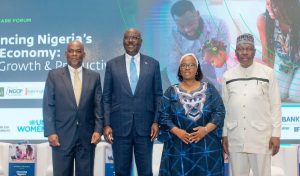
The disclosure was made by the IFC Head of Office in Nigeria, Christian Mulamula, at the National Care Forum themed “Advancing Nigeria’s Care Economy: Jobs, Growth & Productivity,” organised by the World Bank in Lagos.
Mulamula said the country’s care economy remained largely untapped despite its capacity to create employment, improve productivity and contribute significantly to economic growth.
He noted that inadequate access to childcare services was also affecting workplace productivity, particularly among women and working parents.
Citing research findings, the IFC official disclosed that 67 per cent of working parents in Nigeria would be more productive if they had better access to childcare services.
He added that 92 per cent of childcare facilities across the country were small and independently owned, highlighting the need for increased investment and financial support to expand their operations.
According to him, investing in the care sector would not only improve access to quality childcare but also release more time and talent into the economy while giving children a stronger foundation.
Mulamula urged investors, financial institutions, government agencies and other stakeholders to recognise the economic opportunities in the sector and work towards addressing its funding challenges.
He explained that the forum was designed to bring stakeholders together to develop strategies for transforming the care economy into a major source of jobs, productivity and economic growth.
On government policy, he acknowledged the introduction of the National Care Policy by the Federal Government but stressed that effective implementation required collaboration among government agencies, employers, care providers, financial institutions and development partners.
He maintained that no single institution could independently develop the country’s care economy.
Mulamula further noted that the initiative aligns with the World Bank’s priorities in Nigeria, particularly job creation, human capital development, early childhood development, private sector expansion and women’s economic participation.
Also speaking, Lagos State Governor, Babajide Sanwo-Olu, represented by the Commissioner for Finance and Chairman of the Governing Board of the Lagos State Public Procurement Agency, Abayomi Olayomi, described the forum as timely.
The governor said economic productivity depended not only on employment opportunities, infrastructure and investment but also on providing people with the necessary support to participate fully in economic activities.
Sanwo-Olu commended the World Bank and the International Finance Corporation for the initiative and reaffirmed the Lagos State Government’s commitment to supporting the growth of the care sector.