




By Our Reporter
Dr Tunji Alausa, Minister for Education has inaugurated the RHV RoboMed Academy Robotics and Advanced Surgery Training Centre at Redeemer’s Health Village, Redemption City, Ogun State, in a move aimed at strengthening advanced surgical training and medical capacity in Nigeria.
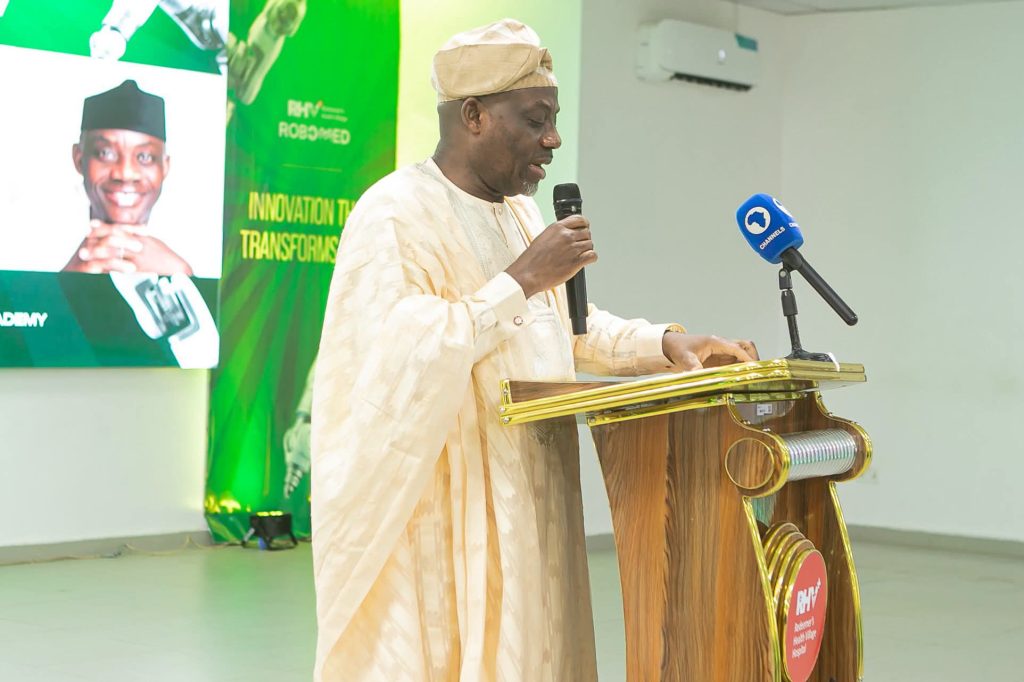
The centre was launched on Thursday, October 22, 2026, alongside the signing of a Memorandum of Understanding (MoU) between Redeemer’s University, RoboMed Global Inc., Redeemer’s Health Village (RHV) and the National Postgraduate Medical College of Nigeria (NPMCN).
The partnership is designed to train surgeons and other healthcare professionals in robotic and advanced surgical procedures, while expanding access to specialised medical education within the country.
Speaking at the ceremony held at The Ark Hall, Redemption City, Alausa pledged federal support for the academy through the Tertiary Education Trust Fund (TETFund) and said it would be designated as the 29th Centre of Excellence.
He said the initiative would enable Nigerian medical professionals to acquire emerging surgical skills locally, reduce dependence on overseas training and strengthen the country’s healthcare workforce.
The minister stressed that access to advanced medical equipment must be accompanied by adequate professional training to ensure safe and effective use in patient care.
“Advanced medical equipment delivers its greatest value when professionals are adequately trained to use it competently, responsibly and in the best interests of patients,” he said.
The MoU was signed by the Vice-Chancellor of Redeemer’s University, Professor Shadrach Olufemi Akindele; RHV Chief Executive Officer, Dr Adedamola Dada; President and CEO of RoboMed Global Inc., Professor Obi Davies-Ekwenna; and President of the NPMCN, Professor Anthony Nnaemeka Ikefuna.
The Ogun State Commissioner for Health, Dr Tomi Coker, and other dignitaries witnessed the signing.
Dada disclosed that the centre was equipped with two advanced robotic systems, one for surgical procedures and the other for training. He said the academy aimed to train 400 participants within its first two years.
According to him, the centre’s programmes would cover robotic surgical services, professional training, in-vitro fertilisation (IVF) and positron emission tomography (PET) scanning.
He added that the initiative was designed to improve access to specialised healthcare, reduce medical tourism, conserve foreign exchange and support the retention of skilled medical professionals in Nigeria.
Dada also disclosed that the centre had conducted 40 robotic surgery cases before its formal launch, including what the organisers described as West Africa’s first tele-robotic surgery.
Davies-Ekwenna said the academy would promote safe and reliable surgical care delivered by Nigerian professionals. He explained that biomedical engineers would be integrated into the training programme to ensure a thorough understanding of the technology, alongside rigorous surgeon assessments, safety protocols and advanced simulation exercises.
He said the long-term vision was to expand access to robotic surgical technology across teaching hospitals in Nigeria.
In his remarks, Akindele reaffirmed Redeemer’s University’s commitment to innovation, medical education and national health development, noting the institution’s work in health-related research through its Institute for Genomics and Global Health.
The Deputy Governor of Enugu State, Dr Ifeanyi Ossai, who also attended the event, called for stronger healthcare financing and expanded health insurance coverage. He also advocated the establishment of similar robotic surgery training centres across the country’s regions.
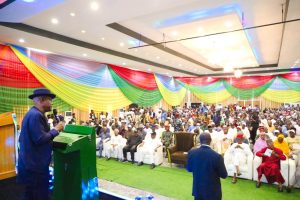
The ceremony attracted medical directors and chief medical directors of teaching hospitals, academics, government representatives and other stakeholders in the health sector.
Following the formal proceedings, guests toured the facility, where a live tele-robotic surgery demonstration was conducted. Alausa, a trained medical professional, operated the system during the demonstration.
The partners said the academy would help build local expertise in advanced surgery, improve access to specialised medical services and strengthen Nigeria’s capacity to adopt emerging healthcare technologies.