




By our Reporter
Hon. Lucky Orimisan Aiyedatiwa, Ondo State Governor has declared that the state is fully prepared for the establishment of State Police, as prominent political figures and democracy advocates called for far-reaching reforms to Nigeria’s security architecture during the commemoration of the 33rd anniversary of the June 12, 1993 presidential election.
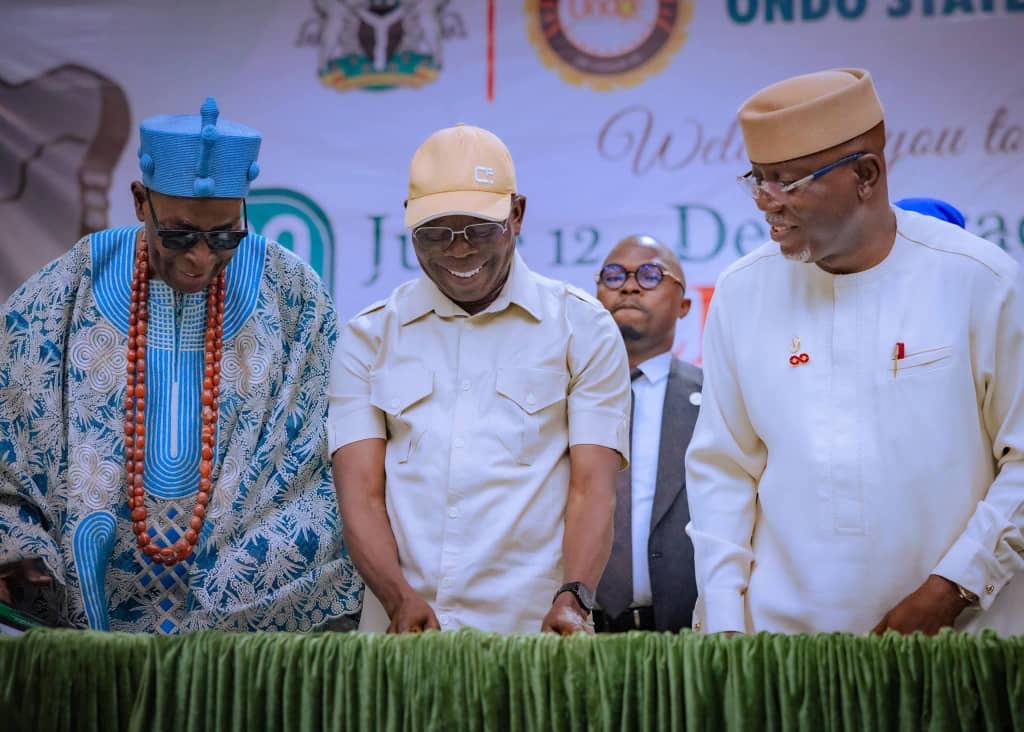
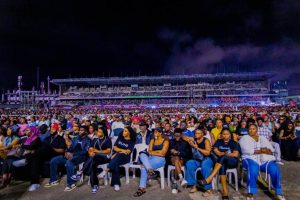
The event, held at the International Centre for Culture and Events (The Dome), Akure, brought together political leaders, traditional rulers, government officials, security agencies, civil society groups, youth organisations and other stakeholders to reflect on Nigeria’s democratic journey and the challenges confronting the nation.
Speaking at the event, Governor Aiyedatiwa described June 12 as a defining moment in Nigeria’s democratic history and a benchmark for credible elections, accountability, the rule of law and public trust.
He noted that democracy remains an evolving process that requires the continuous strengthening of institutions and democratic values.
According to the governor, the 1993 presidential election, widely regarded as the freest and fairest in Nigeria’s history, remains a symbol of the people’s will and should continue to serve as a model for electoral integrity.
Aiyedatiwa expressed concern over persistent security challenges across the country, warning that insecurity poses a direct threat to democratic consolidation by undermining civic participation and public confidence in governance.
He stressed that democracy cannot thrive in an atmosphere of fear and instability.
Addressing the debate on State Police, the governor said Ondo State already possesses the foundational structures needed to operate a state-controlled policing system effectively.
“For us in Ondo State, we’ve been ready a long time. Even during the time of my late predecessor, Arakunrin Oluwarotimi Akeredolu, SAN, the structure that had been built, which I’ve also further strengthened. We have the structure, we have the people and all that is left for the approval of needed weapons and equipment,” he said.
He added that while the state had acquired some security equipment within existing legal provisions, more sophisticated tools would be required to enhance operational effectiveness if State Police becomes a reality.
The governor highlighted efforts by his administration under the OUR EASE Agenda to strengthen security through the expansion of the Amotekun Corps, including its enrolment into the Contributory Pension Scheme, introduction of medical allowances, and recruitment of 500 additional personnel.
He said the measures were designed to bridge security gaps and sustain peace across the state, noting that economic and social development cannot flourish in an insecure environment.
Aiyedatiwa also called on Nigerians to approach the 2027 general elections peacefully, insisting that voters must be able to exercise their franchise freely and that every valid vote should count.
Delivering the keynote lecture, Senator Adams Oshiomhole described June 12 as a symbol of courage, resilience and democratic conviction rooted in the legacy of the late Moshood Kashimawo Olawale Abiola.
Oshiomhole praised Abiola’s steadfast commitment to democracy despite pressure from successive military regimes, describing him as a global symbol of democratic resistance and sacrifice.
“In celebrating Abiola, we are celebrating courage, consistency, doggedness, commitment to nation and fearlessness. He stood firm for democracy and he stood firm for Nigeria,” he said.
The former labour leader recalled his role as Deputy President of the Nigeria Labour Congress during the pro-democracy struggle and acknowledged the contributions of elder statesman and traditional ruler, Olu Falae, to labour-government engagements during the military era.
Oshiomhole argued that the June 12 election demonstrated uncommon national unity, with Nigerians voting across ethnic and religious divides. He, however, expressed concern about the increasing influence of religion in politics, warning that it has distorted political understanding and national cohesion.
He also defended recent economic reforms introduced by President Bola Ahmed Tinubu, including fuel subsidy removal and foreign exchange reforms, describing them as necessary steps to address economic distortions and corruption.
On the Nigerian National Petroleum Company Limited (NNPCL), Oshiomhole supported ongoing legislative scrutiny of the corporation, saying the National Assembly has a constitutional responsibility to investigate audit reports and ensure accountability.
He further criticised the removal of History from the school curriculum, arguing that young Nigerians must understand the country’s past to appreciate its democratic journey.
In his remarks, Oba Falae recounted the sacrifices made during the June 12 struggle and described the annulment of the 1993 presidential election as a watershed moment in Nigeria’s political history.
He recalled that the annulment triggered widespread resistance, leading to the emergence of the National Democratic Coalition (NADECO) and sustained opposition to military rule.
Falae warned against any return to military governance, noting that many activists endured detention, exile and persecution in the struggle that eventually paved the way for Nigeria’s current democratic dispensation.
Earlier, the Chief of Staff to the Governor, Prince Segun Omojuwa, described June 12 as a symbol of hope, unity and the collective will of Nigerians. He commended the contributions of Oshiomhole and Falae to the country’s democratic development and urged citizens to remain committed to defending democratic values.
The event was attended by the Deputy Governor, Dr. Olayide Adelami; Speaker of the Ondo State House of Assembly, Rt. Hon. Olamide Oladiji; Chief Judge of Ondo State, Justice Olusegun Odusola; Head of Service, Chief Olusegun Odusanya; members of the State Executive Council; traditional rulers; religious leaders; labour leaders; local government chairmen; lawmakers and heads of security agencies.
Participants used the occasion to renew calls for stronger democratic institutions, enhanced security coordination and sustained efforts to protect the gains of Nigeria’s democracy.