




By our Reporter
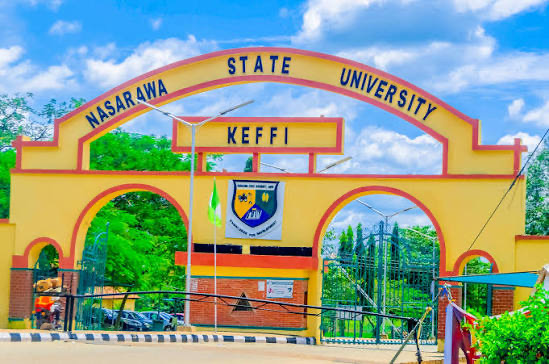
The Nasarawa State University, Keffi (NSUK) has defended the credibility of its postgraduate programmes, dismissing criticisms trailing its record-breaking Silver Jubilee Convocation as misleading and unfounded.
In a statement issued by the university management, NSUK said its graduation of 32,884 students across multiple academic levels—including 1,677 PhD holders—reflects expanded access, academic rigour, and global relevance, rather than any form of “commercialisation” as alleged in some quarters.
The university maintained that its approach to postgraduate education is designed to remove longstanding barriers such as geography, cost, and limited institutional capacity, while preserving high academic standards.
“Access is not compromise,” the statement noted, adding that the institution has developed flexible but robust systems that enable qualified professionals and scholars to pursue advanced degrees without lowering quality.
NSUK emphasised that its doctoral programmes are driven by research with both local impact and global value, spanning areas such as public health, climate-smart agriculture, education reform, digital governance, and economic development. It added that many of its graduates now occupy strategic roles in academia, government, and international organisations.
The university also highlighted its growing international outlook, noting that faculty members engage in cross-border collaborations, global research partnerships, and academic exchanges aligned with international best practices.
On quality assurance, NSUK stressed that its postgraduate processes are rigorous and transparent, involving multiple layers of academic scrutiny—from admission and proposal defence to external examination and final Senate approval.
It further stated that independent examiners from institutions within and outside Nigeria are engaged to ensure credibility, objectivity, and adherence to global standards.
The management reiterated its commitment to a digitally driven, student-centred system, citing innovations such as online admissions, electronic records, and structured research tracking mechanisms aimed at improving efficiency and accountability.
While welcoming constructive criticism, the university cautioned against what it described as misrepresentation of its achievements, insisting that its growth has been matched with strong institutional systems.
“The future of higher education lies in quality with access, rigour with relevance, and growth with accountability,” the statement added.
NSUK reaffirmed its resolve to produce graduates whose research is impactful, credible, and globally competitive, maintaining that proximity and affordability should be seen as enablers of opportunity, not indicators of lowered standards.