




By Jelili Gbadamosi & Ikugbadi Segun
When Mrs Gbemisola Adepena logs into Ogun State’s official digital platform to upload her students’ results, she does so with a mixture of hope and anxiety. While the reforms promise efficiency and transparency, she fears that hours of work could disappear within seconds if the power supply fails or the internet connection drops. The consequences often emerge later, when anxious students call to complain that their results are showing “zero”.
As a senior secondary school teacher in one of Ogun State’s public schools, Adepena’s experience reflects the challenges confronting teachers amid the state government’s ambitious drive to digitise public education.
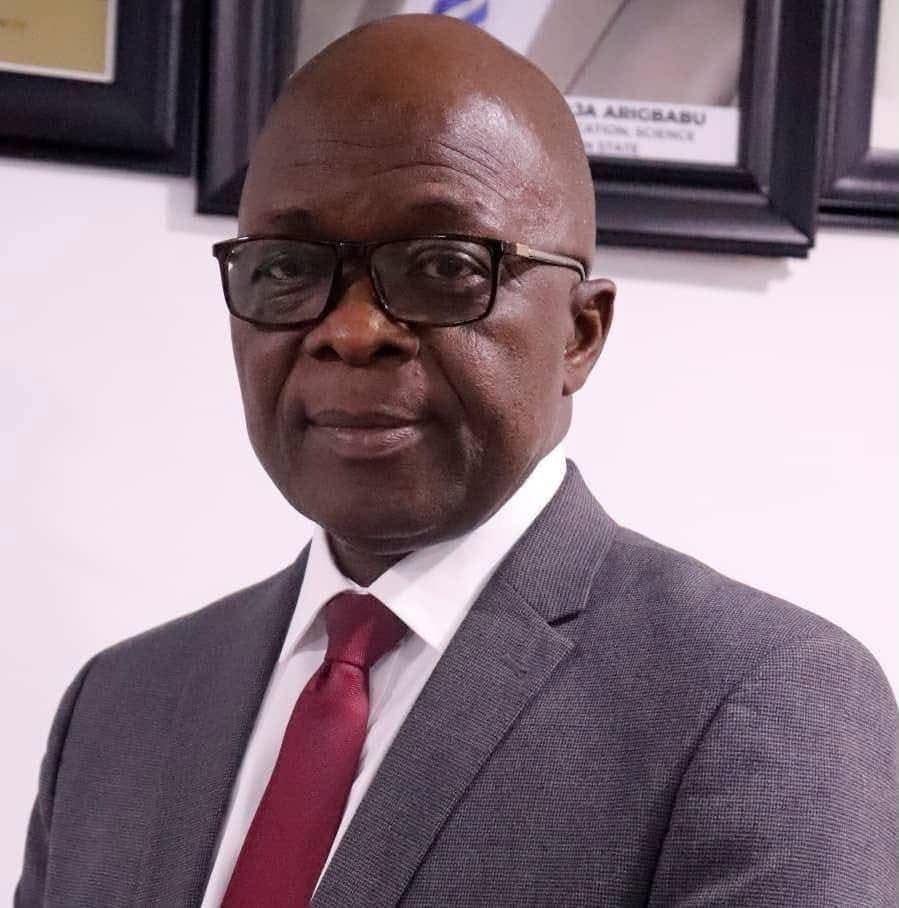
In recent years, the state government, through the Ministry of Education under Professor Abayomi Arigbabu, has introduced digital platforms, including the Digital Platform for Education Records (DIPER), to modernise school administration, streamline admissions and safeguard students’ academic records.
The reforms align with global efforts to use technology to improve educational administration, accountability and access to information. However, the benefits of digitisation depend largely on reliable electricity, internet connectivity and access to appropriate devices—facilities that remain inadequate in many public schools.
Although the shift to online admissions has reportedly increased applications to Ogun State’s model colleges, teachers say persistent power outages, unstable internet connections and shortages of digital devices are undermining the effective implementation of the reforms.
For many teachers, the challenges are immediate and costly. Without government-provided laptops, they often rely on personal mobile phones to upload students’ results. They are also required to maintain manual and digital attendance records, adding to their workload. When the system fails, they may have to repeat the entire process.
Adepena said teachers face considerable pressure from frequent network failures on the state-approved platform for uploading students’ results. According to her, students sometimes discover that their results appear as zero or blank even after teachers have successfully uploaded their scores.
“At the end of the day, after we have uploaded the results successfully, students will call us again that their results are showing zero or nothing. We are then asked to re-upload everything, and the major issue is poor network connectivity,” she said.
She explained that teachers previously used the Ogun State Education Resource Application (OGSERA) before the transition to DIPER. However, she said access to OGSERA had been discontinued, leaving teachers dependent on a platform that they consider unreliable because of poor internet connectivity.
“Once you start uploading on DIPER, you cannot return to OGSERA. We cannot upload scores, download results, or even allow students to check their records until everything is completed, yet the network does not support the process,” she said.
Adepena also criticised the lack of basic working tools, noting that many teachers use their personal mobile phones to manage students’ academic records.
“Every teacher should have a laptop. Phones are not suitable for uploading and correcting results. With laptops, it will be easier to work effectively,” she said.
Comparing the situation with Lagos State, she noted that teachers there receive laptops, data support and digital teaching resources, which she said helped reduce stress and technical difficulties.
“In Ogun State, students go to cyber cafés to print their results only to see zero or incorrect scores. This causes embarrassment and frustration for both students and teachers,” she added.
Beyond result management, Adepena said teachers were required to record attendance manually and online, effectively doubling some administrative responsibilities. She called on the state government to provide laptops, improve internet infrastructure, strengthen teachers’ welfare and introduce better incentives.
“Teachers are training future doctors, engineers, lawyers, and leaders, yet many young people no longer want to become teachers because of how poorly teachers are treated,” she said.
Power failures compound digital challenges
For another science teacher, who requested anonymity, electricity and internet shortages frequently prevent teachers from uploading students’ results, even when the records have been prepared.
The teacher explained that when electricity eventually returns, the digital platform may remain slow or inaccessible, forcing educators to repeat tasks that should take only a few minutes.
Without a stable power supply to operate devices and network equipment, the teacher said, the promised efficiency of digital education remains difficult to achieve. Administrative tasks that should be completed within minutes can stretch into hours or days, frustrating both teachers and students.
Mrs Olusegun, another teacher, said the digital transition had expanded teachers’ responsibilities beyond classroom instruction. Educators are increasingly expected to troubleshoot technical problems, resolve system errors and respond to students’ complaints despite having little or no technical training.
She noted that students often direct their frustration at teachers when results are missing or incorrect online, even when the problems originate from the digital platform.
The situation, she said, has increased stress and weakened staff morale.
A computer studies teacher identified simply as Babs also questioned the promotion of digital learning in schools without adequate technological facilities.
He said many schools lacked functional computer laboratories and reliable internet access, limiting students’ opportunities to practise the skills they learn in class.
According to him, the absence of essential equipment risks reducing computer education to theory, leaving students with limited hands-on experience and inadequate preparation for a technology-driven world.
Similarly, an art teacher, Mr Philip, said the requirement to maintain both manual and digital records had increased teachers’ workload. Like many of his colleagues, he relies on a personal mobile phone to upload students’ results because a laptop is unavailable.
While acknowledging that digital records offer greater security and durability than paper files, Philip said the reforms had placed an uneven burden on teachers.
He maintained that educators were willing to embrace technology but needed adequate equipment, reliable electricity and institutional support to make the transition effective.
Teachers acknowledge benefits of digital reform
Despite these challenges, some teachers have welcomed the introduction of digital academic records.
Mrs Oshipitan of Macjob Grammar School described DIPER as a significant milestone in Ogun State’s education sector, saying it had eliminated the need to carry bulky broadsheets and manually prepare report sheets.
“With DIPER, continuous assessment, tests, and examination results are recorded online. Students can print their results without fear of loss or damage,” she said.
Oshipitan explained that each student receives a Student Identification Number (SIN) from primary school, which remains valid throughout secondary education and helps ensure the security and traceability of academic records.
“The era of carrying report sheets from place to place is gone. Even after ten or twenty years, students can still access their results online,” she said.
However, she stressed that the benefits of the platform could be maximised only if the government addressed persistent power failures, inadequate digital devices and insufficient school facilities.
“Our students and teachers are computer-literate and ready. What we need now are laptops, facilities, and solar power to support the system,” she added.
DIPER and the fight against educational inequality
The Chief Executive Officer of EDUTAMS, Dr Ademola Adenubi, said DIPER had helped reduce barriers to educational opportunities, particularly in admissions to model schools across Ogun State.
According to him, the previous manual application process restricted access for some applicants, whereas the online system allows children from different backgrounds to apply.
“Ogun State has about 42 model schools, and applications are now online. Every child, regardless of background, has equal access,” he said.
Adenubi said annual applications had increased from between 2,000 and 5,000 to more than 15,000 following the adoption of the digital process.
He added that DIPER promotes transparency by processing admissions online, releasing results simultaneously and preventing schools from exceeding their approved capacity.
Adenubi traced EDUTAMS’ development from its work in tertiary education in 2011 to its expansion into public schools during the COVID-19 pandemic, following a partnership with the Ogun State Ministry of Education.
He dismissed concerns that teachers would resist the technology, describing the platform as simple and adaptable. He also said it had reduced result-processing time by automatically generating report sheets once scores were uploaded.
To illustrate the potential benefits, Adenubi recalled an incident in which Governor Dapo Abiodun reportedly retrieved a student’s academic records during a campaign rally and awarded a scholarship immediately—an intervention he said might previously have been delayed by bureaucratic procedures.
Expert calls for training and better infrastructure
The President of the Ogun Tech Community, Mr Adekunle Durosinmi, identified continuous teacher training as essential to improving digital literacy and strengthening the education system.
He said the technology community had organised seminars, workshops, online training sessions and other engagements to equip teachers with relevant digital skills.
“Education is the bedrock of any nation. If teachers are not trained, they cannot effectively impact students,” he said.
Durosinmi noted that computer education had evolved beyond basic concepts to include programming languages, web applications, mobile platforms and other emerging technologies. He argued that teachers could not effectively teach these subjects without adequate training, equipment and access to current technologies.
“Computer science is no longer static. Today, it is about web applications, mobile platforms, and emerging technologies. Teachers cannot teach what they do not have access to,” he said.
He also highlighted the shortage of electricity, water, functional computer laboratories and affordable internet services in many public secondary schools. He called for government-subsidised internet services dedicated to educational use.
Durosinmi commended recent curriculum reforms by the Minister of Education, Dr Tunji Alausa, and praised Dr Ronke Soyombo, Registrar of the Teachers Registration Council of Nigeria and Special Adviser to the Ogun State Government on Education, for her reform efforts.
He further advocated the establishment of a dedicated Ministry of Information and Communication Technology in Ogun State to coordinate digital initiatives more effectively.
Bridging the gap between policy and practice
Ogun State’s digital education reforms demonstrate the potential of technology to improve admissions, protect academic records and simplify school administration. The reported increase in applications to model colleges and the elimination of some manual processes point to the opportunities offered by the transition.
Yet, teachers’ experiences suggest that digital platforms alone cannot guarantee effective reform. Unreliable electricity, poor internet connectivity, inadequate devices and additional administrative responsibilities continue to limit the benefits.
For the reforms to deliver their full potential, the state must ensure that schools have the infrastructure and equipment required to operate digital systems reliably. Providing laptops, improving internet access, investing in alternative power sources and offering sustained technical support could ease teachers’ workloads and improve students’ access to accurate academic records.
The challenge is therefore not simply to digitise education but to create the conditions that allow teachers and students to benefit from it. Without these essential investments, Ogun State’s digital ambitions risk remaining more visible in policy than in the everyday realities of its classrooms.
Sparklight News contacted the Honourable Commissioner, Professor Abayomi Arigbagbu, to seek clarification on the ministry’s efforts to address the challenges facing the schools. However, no response had been received more than 24 hours after the message was sent, as of press time.
It is hoped that the government will go beyond proposing reforms to provide the necessary facilities and resources to ensure their effective and smooth implementation.