




By Ikugbadi Oluwasegun
The Lagos State Government has announced plans to increase electricity supply to the state to above 3,000 megawatts from the current level of below 1,000 megawatts by March 2027, as part of efforts to end blackouts and build a 24-hour power economy in the state.
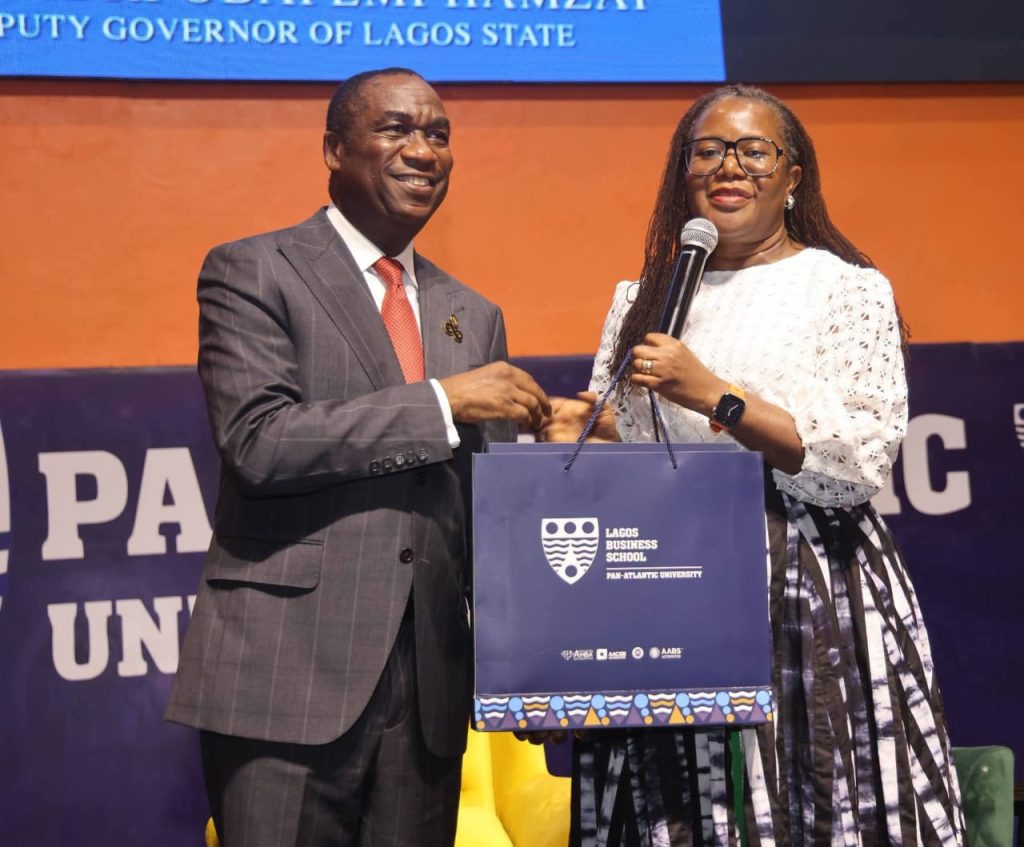
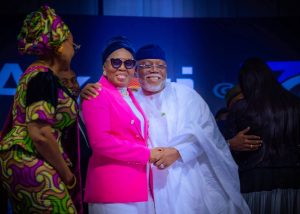
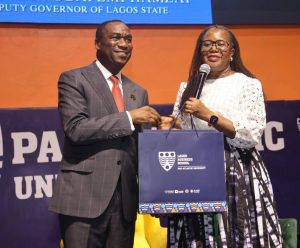
Governor Babajide Olusola Sanwo-Olu disclosed this on Saturday at the Fourth Lagos Business School Africa Energy Conference (AEC 2026), with the theme, “Securing Nigeria’s Energy Future: Policy Reform, Capital Mobilisation, and Pathways to a Sustainable Power and Energy Market,” held at the Honeywell Auditorium, Lagos Business School (LBS), Lekki-Epe Expressway, Lagos.
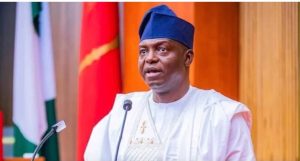
Sanwo-Olu, who was represented by his Deputy, Dr. Kadri Obafemi Hamzat said the state is working to mobilise an additional 2,000MW through national grid resources, independent power projects, energy hubs, power barges, energy traders, and embedded generation supply. He stated that achieving the target would require coordinated improvements across the electricity value chain, including generation, transmission, distribution, gas supply, and metering.
His words: “Lagos needs more power. Our immediate objective is to mobilise 2,000MW of additional electricity supply through multiple channels, including additional national-grid resources, Lagos independent power projects and energy hubs, excess generation, power barges, energy traders and embedded generation. Our ambition is to move from below 1,000MW today to well above 3,000MW by March 2027, while continuing to build towards the larger requirements of the Lagos economy.”
To achieve the target, the governor outlined a seven-point action plan focused on making the Lagos Electricity Market fully functional, increasing electricity generation, strengthening distribution capacity, reinforcing transmission infrastructure, improving networks and metering, strengthening gas-to-power arrangements, and enhancing information technology and market visibility.
He noted that the state is working to strengthen its transmission network, improve substations and distribution feeders, and expand metering coverage to reduce estimated billing and improve service delivery, adding that the government is working to establish clear contractual obligations, strengthen coordination among electricity market operators and regulators, and create a commercially viable environment capable of attracting private investment.
The Governor further emphasised the importance of reliable gas supply to power plants and the deployment of digital systems, including Supervisory Control and Data Acquisition (SCADA), Advanced Metering Infrastructure (AMI) and the Lagos Electricity Intelligence Platform, to improve monitoring, accountability and transparency.
He noted that Lagos had also recorded progress in renewable-energy interventions, with about 42,000 of the approximately 50,000 streetlights earmarked for solarisation completed, alongside solarisation projects in 175 public schools, with another 100 ongoing.
Sanwo-Olu, therefore, called on investors, financial institutions, energy operators and development partners to collaborate with the state in delivering the plan, noting that reliable electricity is essential to industrial growth, job creation, business competitiveness and improved living standards.
He said the focus is now on disciplined implementation and measurable results that would support the development of a sustainable electricity market and strengthen Lagos’s economic growth.
In his keynote address, the Vice President, Deepwater Assets/Managing Director, Shell Nigeria Exploration and Production Company Limited (SNEPCo), Ronald Adams called for a sustainable implementation of Nigeria’s energy sector reforms to attract investment, accelerate oil and gas development and translate the country’s vast natural resources into economic growth, job creation and improved energy access.
He stated that Nigeria’s oil and gas resources could drive industrialisation and strengthen energy security if supported by competitive fiscal policies, regulatory certainty, efficient project approvals, and disciplined execution.
Adams noted that Nigeria’s estimated 37 billion barrels of oil and condensate reserves and over 250 trillion cubic feet of gas reserves presented significant opportunities but stressed that resource abundance alone could not guarantee prosperity.
While reaffirming Shell’s commitment to Nigeria, the Vice President emphasised that natural gas must play a central role in supporting electricity generation, manufacturing and industrial development, adding that the country’s energy future depends on converting its resources into reliable power, productive industries and shared prosperity.
Similarly, in her address, President of the Lagos Business School Energy Club, Sebilat Quadri, stated that the ambition of the conference is to establish a platform where policy makers, financiers, investors, energy operators, academics and other key stakeholders could come together to engage meaningfully on the issues shaping Nigeria’s energy future.
She added that the theme of the event reflects the need to translate Nigeria’s considerable energy potential into bankable projects, mobilised capital, critical infrastructure, and measurable impact.
Earlier in her welcome address, Dean of Lagos Business School, Prof. Olayinka David-West, underscored the importance of reliable, affordable and sustainable energy to Nigeria’s economic growth, industrial development, investment and shared prosperity, noting that energy remains central to Nigeria’s development trajectory, as it determines business competitiveness, industrial productivity, citizens’ quality of life, and the economy’s capacity to generate jobs and prosperity.
David-West observed that achieving a sustainable energy future requires the country to address persistent challenges across policy, infrastructure, financing and market development, urging stakeholders to look beyond individual interventions and adopt a holistic approach that considers the entire energy ecosystem.