




By Ikugbadi Oluwasegun
The Senate Committee on Finance on Monday, queried the Minister of Finance and Coordinating Minister of the Economy, Taiwo Oyedele, on the rising public debt profile, slow implementation of the 2026 budget and remittances into the Consolidated Revenue Fund (CRF).
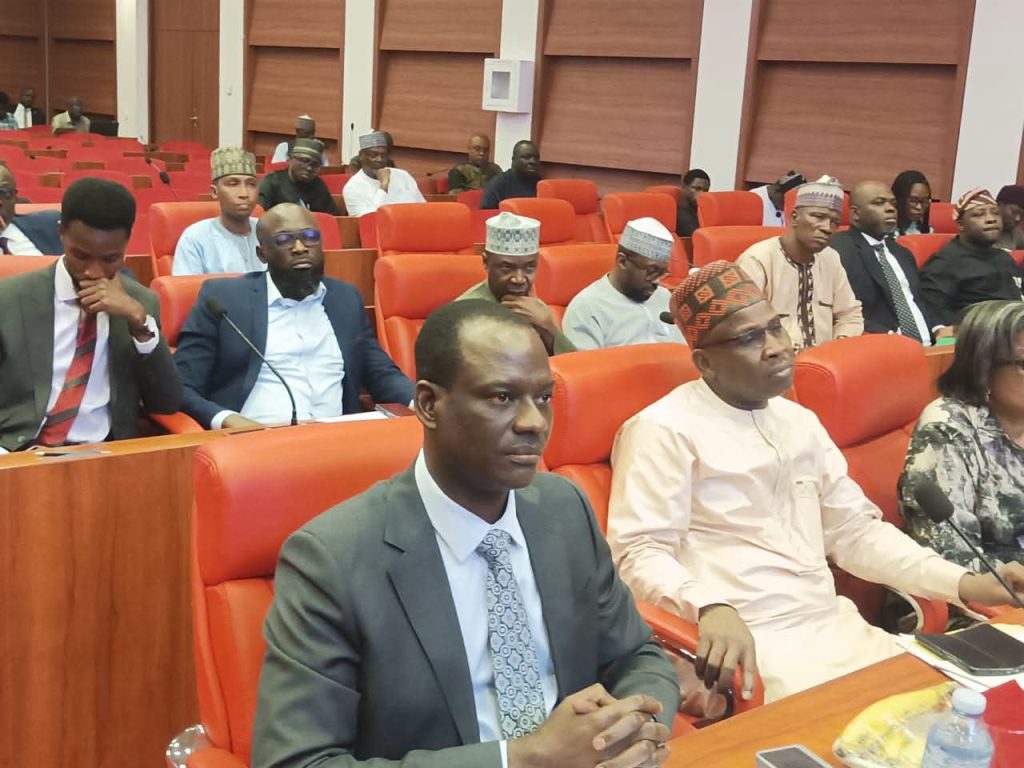
The issues came up during an investigative hearing on the remittance of Internally Generated Revenue, IGR, and operating surplus into the CRF by Ministries, Departments and Agencies, MDAs, for the 2023 to 2025 fiscal years.
Chairman of the committee, Senator Sani Musa, APC, Niger East, said the interaction was part of the Senate’s constitutional oversight responsibility to promote transparency, accountability, and prudent fiscal management.
He said, although, recent economic reforms had produced encouraging results, more efforts were needed to ensure the gains translated into lower inflation, job creation, and improved living standards for Nigerians.
According to him, the interaction would review revenue performance, fiscal reforms, budget implementation, debt sustainability, and the government’s strategy for sustaining economic growth and fiscal resilience.
Oyedele commended the National Assembly for its support of the administration’s economic reforms, saying the partnership between the executive and legislature had contributed to restoring macroeconomic stability and improving investor confidence.
He said Nigeria’s Gross Domestic Product, GDP, grew by about 3.8 per cent in the first quarter of 2026, up from 3.13 per cent recorded in the corresponding period of the previous year, with the non-oil sector accounting for much of the growth.
The minister also said that federal revenue rose to N21.6 trillion in the first half of 2026, representing a 49 per cent increase over the same period in 2025, driven by tax reforms, improved digitalisation and stronger compliance.
He added that the country’s gross external reserves had exceeded $51 billion, the highest level in 17 years, while inflation had begun to moderate following coordinated fiscal and monetary measures.
However, committee members, Senator Mohammed Monguno, APC, and Borno North, expressed concern over the country’s growing debt profile, the slow pace of budget implementation, and inadequate funding for capital projects.
Senator Adamu Aliero, PDP, Kebbi Central, also questioned the non-release of capital allocations to security agencies, despite worsening insecurity, describing the situation as a major concern.
The lawmakers further sought explanations over reports that only about N2 trillion was shared among the three tiers of government from a monthly federation revenue of about N3.7 trillion.
Oyedele said many of the figures being cited in public on Nigeria’s debt profile were misleading because they often confused borrowing approvals granted by the National Assembly with actual funds drawn by the government.
He maintained that the federal government had not utilised up to half of the borrowing approved by the National Assembly and had remained within the limits prescribed by the Fiscal Responsibility Act.
The minister attributed the increase in the country’s debt stock largely to the revaluation of external loans, following the depreciation of the naira and the securitization of Ways and Means advances inherited from the previous administration.
He also said a significant portion of domestic borrowing was used to refinance existing obligations rather than contract new debt.
Oyedele said exceeding revenue targets did not remove the need for borrowing because government expenditure continued to outpace revenue.
He listed debt servicing, implementation of the new minimum wage, funding of the Nigerian Education Loan Fund, NELFUND, and other statutory obligations, among factors driving government expenditure.
The minister also defended deductions from the Federation Account Allocation Committee, FAAC, saying they were made in line with constitutional provisions and other extant laws.
He explained that tax incentives granted through the Nigeria Customs Service were aimed at supporting the importation of military equipment, food, pharmaceuticals, electric vehicles, and manufacturing inputs to reduce production costs and ease pressure on consumers.